
 Massimo Usai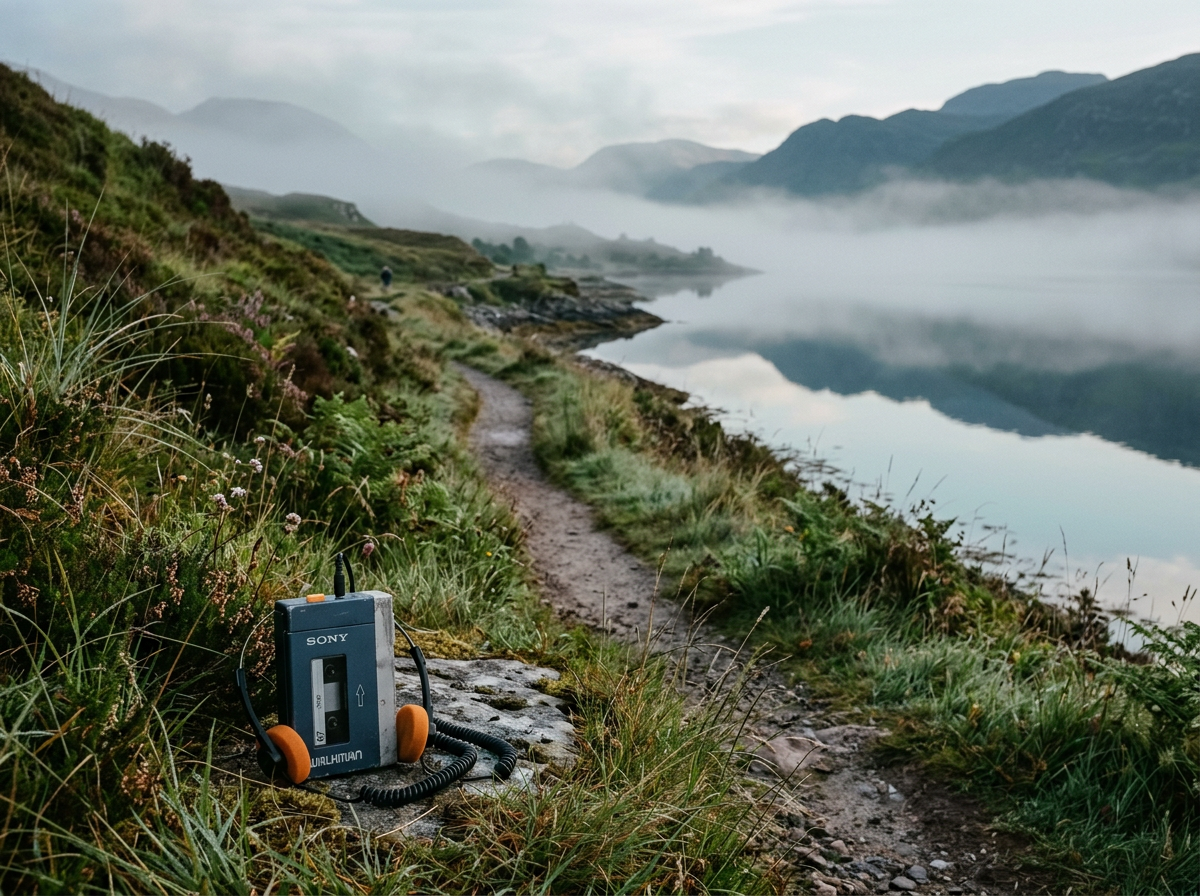
The places where people live longest move at a pace most films would cut. A handful of filmmakers have learned to keep the camera there — a way of watching the world that critics call slow cinema — and in doing so, they teach us how to stay.
Perfect Days and the Beauty of Doing Nothing
There is a moment, early in Perfect Days, when nothing happens, beautifully. Hirayama — a Tokyo toilet cleaner played by Koji Yakusho — sits on a bench during his lunch break, looks up through the branches of a tree, and watches the light move. The Japanese have a word for exactly this: komorebi, the sunlight filtered through leaves. Wim Wenders, who made the film in 2023 and watched Yakusho win Best Actor at Cannes for it, builds two unhurried hours around a man who has nothing the modern world would call a life, and everything the Blue Zones would recognise as one.
Because Hirayama, without ever using the word, is living ikigai — the Okinawan sense of a reason to rise in the morning. He has his route, his cassettes, his trees, his cheap film camera, his small rituals held with a monk’s care. He is not waiting for his life to begin. He has noticed that it already has.
I keep returning to this film because it does something rare: it makes slowness watchable. And slowness, it turns out, is the through-line of every place where people reach a hundred.
What the Blue Zones Documentaries Show, Not Tell
When Netflix released Live to 100: Secrets of the Blue Zones in 2023 — the four-part series that went on to win Buettner three Daytime Emmys — it could easily have been a lecture. Instead its real argument is visual. The camera lingers on a Sardinian shepherd taking a hillside at the unbothered pace of a man who will climb it again tomorrow. It sits with Okinawan friends at a low table for longer than television usually allows. It watches Ikarians not doing very much at all. You come away having absorbed something the narration only half explains: these lives have room in them.
This is the quiet thesis. Mainstream cinema is built on compression — the montage that turns a decade into ninety seconds, the cut that spares us the boring parts. But the boring parts, in the Blue Zones, are the parts that keep people alive. The shared meal that runs to three hours. The walk that has no destination. The afternoon nap that Ikaria treats almost as a civic right.
Slow Cinema and the Directors Who Refuse the Cut
Filmmakers who understand longevity, then, are usually the ones brave enough to refuse the cut. Wenders learned it partly from Yasujiro Ozu, the Japanese master whose camera sat at the height of someone kneeling on a tatami mat and simply stayed, trusting that an ordinary family at an ordinary dinner was drama enough. Ozu’s films are full of people growing old without panic. They are, in a sense, the original Blue Zone cinema.
There is even a name for the broader tendency — slow cinema, the term critics reach for when a director lets a shot breathe past the point of comfort. Watching it can feel, at first, like an act of withdrawal. Stay with it and it becomes the opposite: a retraining of attention, a reminder that the eye, given time, finds more than it expected to.

Attention: The Real Currency of a Long Life
And attention may be the real currency here. The centenarians of Nicoya and Sardinia did not have more hours in the day than we do. What they had was a relationship with those hours that refused to treat them as something to get through. The screen, of all things, can rehearse that relationship for us — two dark hours in which we are asked, gently, to look at a tree and not reach for the phone.
There is a second lesson hiding in how these films are best watched. The Blue Zones never do anything important alone, and a film, too, was once a thing you sat through shoulder to shoulder — a grandmother, a teenager and a sceptical uncle all held by the same flickering light. To watch slowly and together is itself a small Blue Zone practice: a shared meal for the eyes, an hour the family spends in the same room without anyone leaving early. The Okinawans would understand it instantly. So would the Ikarians, who never learned to hurry a good evening to its end.
So if music is how the Blue Zones gather, cinema may be how the rest of us practise. Not the films that hurl us through three timelines before the popcorn has settled, but the ones brave enough to move at the speed of a real afternoon. Put on Perfect Days. Sit through the parts where nothing happens. Notice that, somewhere in the middle, your own breathing has slowed.
The longest-lived people on earth never needed the lesson. They were already living at twenty-four frames of a life fully attended. The best filmmakers are simply pointing the camera at them, and asking us — for once — not to look away.
Scopri di più da LONGEVITIMES
Abbonati per ricevere gli ultimi articoli inviati alla tua e-mail.


